Population Control or Patriarchal Crime? The Truth About Female Foeticide
Author: Rui Jadhav
(Intern)
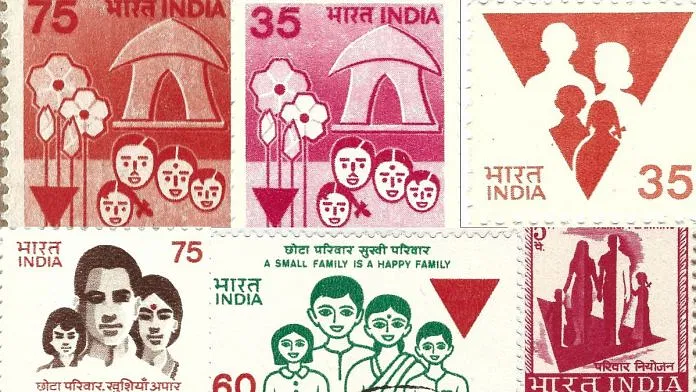

“A woman carries one life at a time, a man can father many. So why, in our quest for sons and escape from dowry, does this patriarchal society murder its daughters before birth?-– snuffing out a girl’s life for the sake of a son or excuses and false promises of population control?
May it be a boy or a girl, killing them is NOT fair, an unwanted child can find a home in an orphanage, NGO or adoption centers, why do we choose the ultimate crime?”
This chilling question finds its answer in the shadows of our society, where unthinkable acts become reality; consider this scene:
A midwife steps out of the door holding a newly born child with a long face, before she would announces the birth of a girl, the man of the house who doesn’t care to look at the child commands to take it away…she who is threatened and obliged to do as told, carries the girl child to a forest nearby. Umbilical cord still uncut, the child is fed salt, neck snapped or twisted, and buried in a pit, that is called ‘infanticide.’ (a child being killed right after the birth or within a year) to be specific, it was ‘female infanticide’. Shockingly brutal? Well this is how innocent unborn as well as newborn children are sentenced to death in rural areas.
Speaking of unborn children ( fetuses), ‘female foeticide’ is another side of the same coin, a common practice that occurs due to the preference of a son over a daughter. ‘Illegal sex determination’ which later results in ‘sex-selective abortion’ – the termination of a pregnancy based on the predicted sex of the fetus. While it can occur with either gender, it is often used to target female fetuses due to a preference for male children in some cultures.
The headline of ‘The Hindu’ article ( 2012) ‘India loses 3 million girls in infanticide’ , 13 years have passed since 2012; is this issue irrelevant in contemporary times? Probably not, the birth of a female child is probably uncelebrated yet, and the crime still exist somewhere; the proof of it would be the need to initiate awareness campaigns taken place in Bibipur, Haryana (2023) UNWANTED DAUGHTERS: FIGHTING FEMALE FOETICIDE IN INDIA.
Quoting a precise number of these crimes is unachievable due to the following Challenges in Data Collection:
- Illegality: Female foeticide is illegal in many of the affected countries, making it a hidden practice and very difficult to collect accurate statistics.
- Underreporting: Cases are often not reported to authorities.
- Estimation based on ‘Sex Ratio at Birth’: Most estimates rely on analyzing deviations from the natural sex ratio at birth, which is an indirect measure.
The prenatal diagnostic techniques that were meant to detect fetal abnormalities were evidently prone to widespread exploitation through prenatal sex determination and sex selective abortions. These techniques ended up strengthening and increasing infanticide.
In current times doctors refrain from telling us the sex of the fetus, because Pre-Natal Diagnostic Techniques (Regulation and Prevention of Misuse) Act (PNDT Act) in 1994, banned prenatal sex determination to prevent female foeticide. This Act was later amended in 2003 to become the Pre-Conception and Pre-Natal Diagnostic Techniques (Prohibition of Sex Selection) Act (PCPNDT Act), further strengthening the ban to include pre-conception sex selection.
To know the in-depth history of why and how sex determination technology started and factors involved read The return of Ultrasound (TOI- 2022). To understand how these practices became so prevalent, it’s essential to differentiate between the prenatal diagnostic techniques that, though medically vital, were tragically misused.
Different prenatal tests
Feature | Ultrasound | Amniocentesis | Chorionic Villus Sampling (CVS) |
Method | Non-invasive (sound waves) | Invasive (needle to extract amniotic fluid) | Invasive (needle/catheter to extract placental tissue) |
Timing | Any trimester (often 1st, 2nd, 3rd) | 15-20 weeks gestation | 10-13 weeks gestation (earlier) |
Primary Goal | Fetal development, anatomy, screening | Definitive diagnosis of chromosomal/genetic disorders, neural tube defects | Definitive diagnosis of chromosomal/genetic disorders |
Sex Determination | Can determine sex visually (not 100% accurate, depends on visibility) | Can determine sex definitively (from fetal cells) | Can determine sex definitively (from placental cells) |
Neural Tube Defects | Can screen/suggest risk (requires follow-up) | Can directly test for (e.g., spina bifida via AFP) | Cannot directly test for(requires separate blood test) |
Risk of Miscarriage | Extremely low/negligible | Low (approx. 0.1-0.3%) | Slightly higher than amnio (approx. 0.5-1.0%) |
Results Time | Immediate (visual) | Days to a few weeks | Rapid results in 3 days, detailed in 2 weeks |
The Saved Pearl foundation (TSPF) helps women in crisis pregnancies, who don’t have support, by giving them medical facilities, accomodation, financial and legal aid and mental health support. If you know a woman in need or spot an abandoned newborn please connect with us.
To further understand the gravity and nuances of this crucial topic, a list of powerful films and documentaries that offer deeper insights
In India, village midwives make a shocking confession — BBC World Service Documentaries
Agents of death: female Foeticide in Maharashtra
Meet the man who stood up against female foeticide in Haryana